
Sex Work Affirming Therapy: Your Sex Work Exclusionary Sex-Positivity is just Purity Culture in Drag
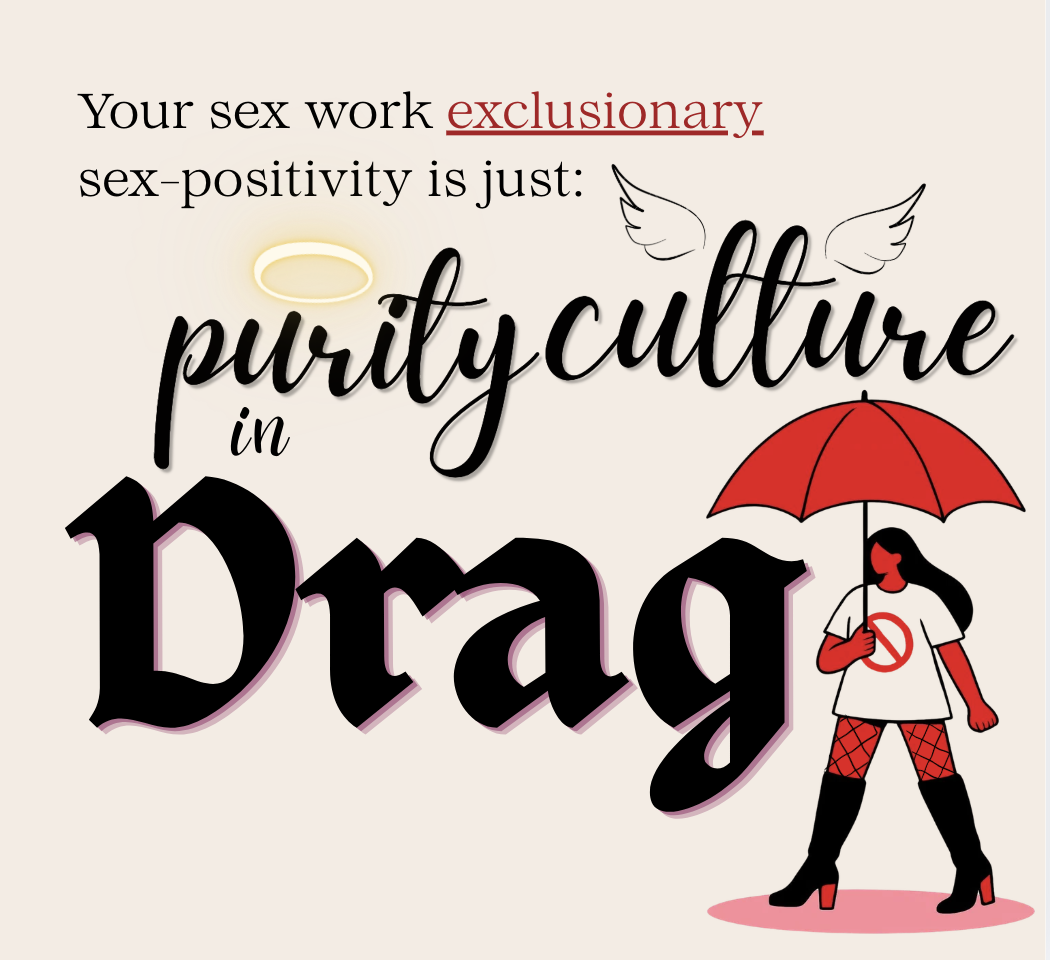
The idea of being “sex positive” has gone mainstream… When people identify as ‘sex positive’ in the queer community, at inclusive events, on their dating bios, or even therapist profiles they are generally signaling, “I have a positive attitude about sex, kink, pleasure, body autonomy, and consent.” All too often the self-proclaimed sex-positive folks go silent when sex work is brought into the conversation.
Sex positivity isn’t just a social movement or a cute hashtag. Being sex-positivity isn’t just about a positive attitude around sex. True sex positivity is a radical, political stance; it’s about the freedom of consensual, sexual expression in all forms, including labor.
A Very Brief History on Sex Positivity
The sex positivity movement first entered the chat in the early 1900s when Wilhelm Reich, an Austrian psychoanalyst, asserted that societies that hold either a positive or negative view of sex. They see it either as a normal, healthy part of the human experience or something to be repressed and controlled.
The 1950s and 60s movement toward “free love” popularized sex-positivity and brought it back into mainstream feminism. This movement triggered a counterculture-movement: The Sex Wars.
In the 1970s, The Sex Wars, also known as The Porn Wars, began dividing feminists into two camps: Sex Work Exclusionary Radical Feminists (SWERFs) and Sex-Positive Feminists. The SWERFs asserted porn was inherently harmful to women, they dubbed themselves Women Against Porn or WAP (huge thanks to Cardi B for reclaiming this). The feminist group who included sex workers chose to honor it as a choice.
Current Climate Around Sex Work
The normalization of sex work through platforms like OnlyFans has made sex work more visible. Influencers selling feet pictures, flaunting their profits suggest the work is easy. Pop culture shows like Law and Order: SVU all too often position sex workers as victims to be rescued; while doing nothing for the community. These common tropes lack nuance. None of this visibility has decreased harm, nor has it reduced the whorephobia impacting sex workers every day.
Whorephobia: The system in which sex workers are marginalized, criminalized, and socially ostracized; refers to the disgust, dehumanization, and fear of sex workers and behaviors that are considered aligned with sex work. It is intimately connected to misogyny (the hatred of women), patriarchy (men hold the power), and rape culture (removing consent & autonomy, normalizing violation). (Definition from Equitable Care Certification 2024)
So Why Include Sex Workers?
You can't be consistent without it: Sex positivity is built on the principle that consensual sexual expression deserves freedom from shame and judgment. The moment you make an exception for those whose sexuality intersects with labor, you've introduced exactly the kind of conditional acceptance the framework was supposed to dismantle. "I support your sexuality unless you get paid for it" is not sex positivity, it's just personal comfort dressed up as values.
Centering the most marginalized: this concept ensures that movements address systemic inequities at their root rather than leaving the most vulnerable behind. Sex workers are the most vulnerable, they face legal criminalization, social shame, violence, and exclusion. A movement that centers the least stigmatized people (like Chad who likes his nipples clamped) while ignoring the most marginalized is a movement doing the easy work and skipping the hard part.
Sex Workers built the framework: Sex workers created the language and politics that sex positivity runs on. They have been at the center of history: think Marsha P. Johnson of Stonewall, Carol Leigh who coined “sex work” as a term connecting sex to labor, or COYOTE, the first organization to center sex-positive feminist politics. Excluding sex workers from a movement they founded isn't a neutral position, it's actively rewriting history to erase them.
Supporting "safety" but not rights is saviorism repackaged: A common deflection is "I care about their safety, just not the industry.” Sex work organizations consistently say decriminalization, reduced stigma, and labor protections are what actually make them safer, not your egocentric need to “rescue them”. Prioritizing your moral discomfort with the industry over what sex workers need centers your feelings, not their wellbeing.
The labor/sexuality split is artificial: People often treat personal sexuality as worthy of liberation but sexual labor as a separate, “dirtier” category. That distinction relies on the idea that sex becomes degraded when money enters which is itself a deeply conservative, shame-based assumption. It ignores that power is present in all sexual encounters, with or without money.
Silence is Violence: Excluding sex workers doesn't just leave them out — it actively contributes to the conditions that put them at risk. Social stigma feeds legal criminalization. Legal criminalization removes labor protections and increases violence. Calling yourself sex positive while staying quiet about decriminalization isn't a neutral stance; it's choosing the side of the stigma.
How to Include Sex Workers?
Interrogate your own bias - Whorephobia and purity culture are baked into us before we're old enough to question it. It’s okay if you still feel that impact, (it might show up as discomfort or defensiveness reading this) right now you are being given the opportunity to unlearn these outdated views and expand your definition of sex positivity to include sex workers.
Get critical - Notice how sex workers are talked about, interacted with, and portrayed in your community and in the media you consume.
Your friends stripper jokes are whorephobic
Cop-aganda media that centers “rescuing” sex workers is disempowering
Your favorite show portraying sex workers as uneducated victims lacks nuance
Appropriating whore-culture as aesthetic perpetuates stigma (@ euphoria)
Taking pole dancing classes for exercise while looking down on real dancers reinforces discrimination
Consume ethical porn - This means paying for it! Ethical content is made legally, produced with a focus on fair labor practices, performer well-being, and enthusiastic consent. This means performers are paid a livable wage! It reflects real people and real sex, it shows diversity and highlights mutual pleasure. Such content doesn’t come free!
Support Decriminalization Efforts - Decriminalizing sex work would remove the fear of arrest, create a safer working environment, enable workers to report crimes, decreases violence against sex workers, reduce the risk/vulnerability of sex trafficking and more broadly protect body autonomy, freedom of choice and the human rights of workers