
Kink-Affirming Therapy: When I Say CBT I Mean Cock & Ball Torture, Not Cognitive Behavioral Therapy
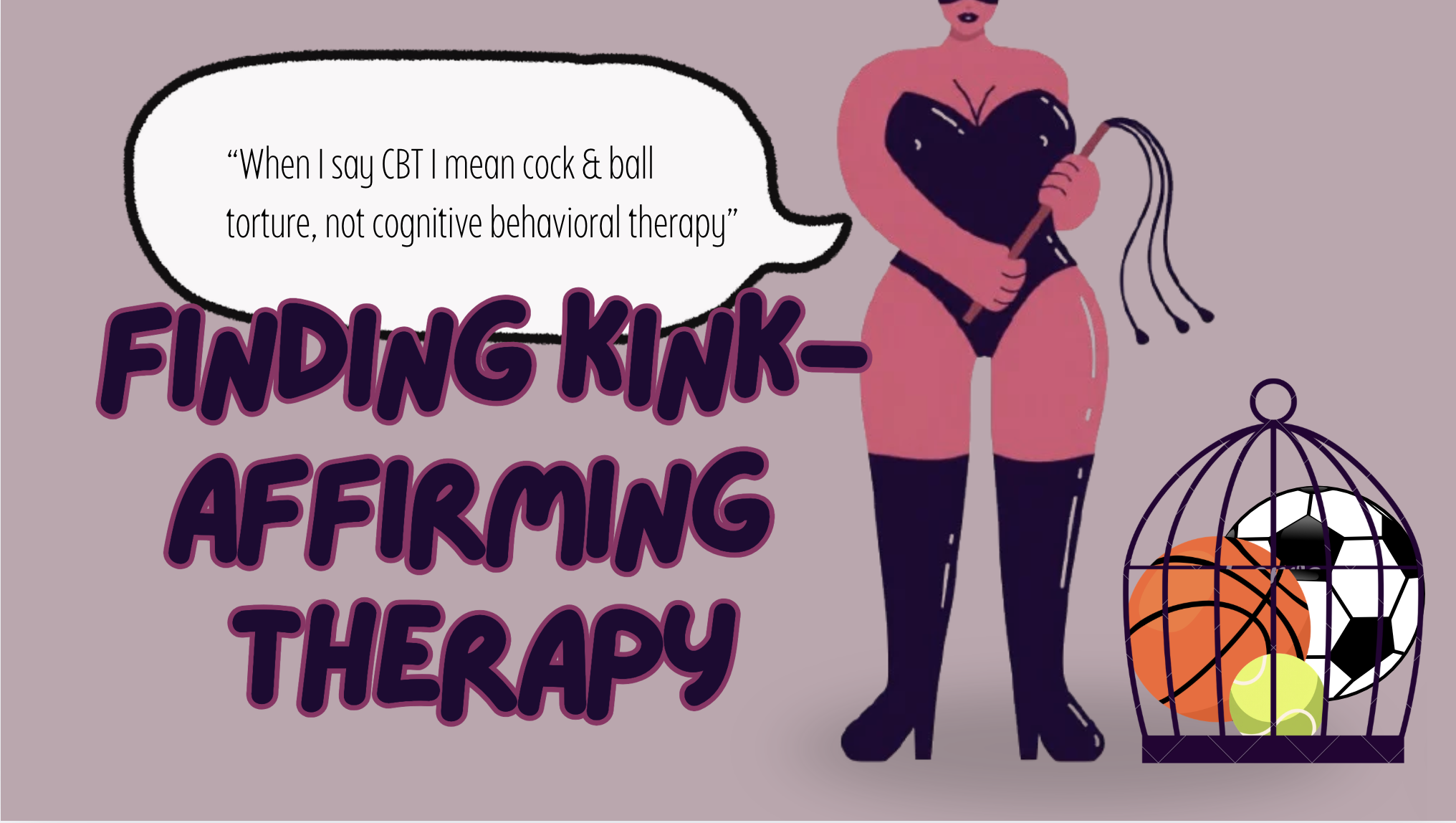
As a kinkster myself, I deeply understand the importance of having a therapist that can hold your full identity and experience. I want to be able to tell my therapist about a scene without fear of judgement. I want to be able to refer to my kinks without my mental health being questioned. I want to share explicitly and honestly about all parts of me without having to define RACK.
Finding a therapist that understands the vocabulary and the scene can feel daunting; most therapists aren’t going to explicitly name their bias when asked directly so how can we vet them?
A kink-affirming therapist won’t pathologize your sexuality or treat BDSM as a problem; they meet you where you are at. They don’t assume kink is related to why you are in therapy; they support you in dictating the process. They don’t assume your taboo interests are born from trauma; they curiously explore from a pleasure-centered perspective.
Maybe it seems like the (spreader) bar is on the floor… and that's because it is!
Training on sex is barely standard in graduate schools, never mind anything kinky. This means therapists are often left to self education when it comes to kink. Reddit really goes off when it comes to kink education but it's on the therapist to seek this out. Unfortunately, many aren’t going to and Reddit is only a starting place, clinical training is the next step!
Previously the Diagnostic and Statistical Manual of Mental Disorders (DSM) or the big book of all clinically recognized mental illnesses classified kinks as disorders. Only in the newest version of the DSM has sadomasochism been removed. The National Coalition of Sexual Freedom has continuously advocated for these changes over the years but some damage has already been done when therapists were taught using the older versions of the DSM. We have a lot of unlearning to do!
Many therapists have their own bias and discomforts when it comes to sex. Therapists are human too, they come to the room with their own history, culture, values and knowledge. Some of that can be really beautiful, it offers an opportunity for lived-experience therapists to further connect with clients. It can also be an opportunity for repair when accidental harm happens. But when that challenging, unlearning and relearning hasn’t happened around kink a therapist can intentionally or unintentionally cause harm. This can be in the form of shame, avoidance, embarrassment, guilt, and unnecessary pathologization.
Psychology Today isn’t as Reliable as a Rigger who Knows Their Knots
Psychology Today is the first stop for many people finding a therapist. It’s important to know that Psychology Today is not regulating therapist profiles. That means anyone can check the box that they are “Sex-Positive and Kink Friendly” but that doesn’t actually mean they are. Try these databases for a better shot at finding a kink-affirming therapist
https://www.manhattanalternative.com/
https://www.kapprofessionals.org/
https://www.inclusivetherapists.com/
Negotiating the Scene: What to Ask a Therapist to Determine Competency
Many therapists offer a free 15-minute consultation prior to booking, use this time wisely! You can try asking the following questions to sus out if they just checked the box or know their shit:
How do you incorporate sex-positivity into your work?
What training have you taken related to kink?
What kinks do you have experience working with?
Hot tip: Don’t just listen to their words, gauge their reaction if you say sex and they flinch they probably aren’t the right fit.
Remember Finding the Right Therapist is like Finding the Right Strap: it has to feel right!
Much of the research suggests that the number one predictor of successful therapy is liking your therapist. The rapport and relationship is CRITICAL! So your therapist doesn’t know about feederism or flogging? Maybe that's okay! As long as they approach with curiosity, not judgement, and are willing to learn both inside and outside of the session it can still work.